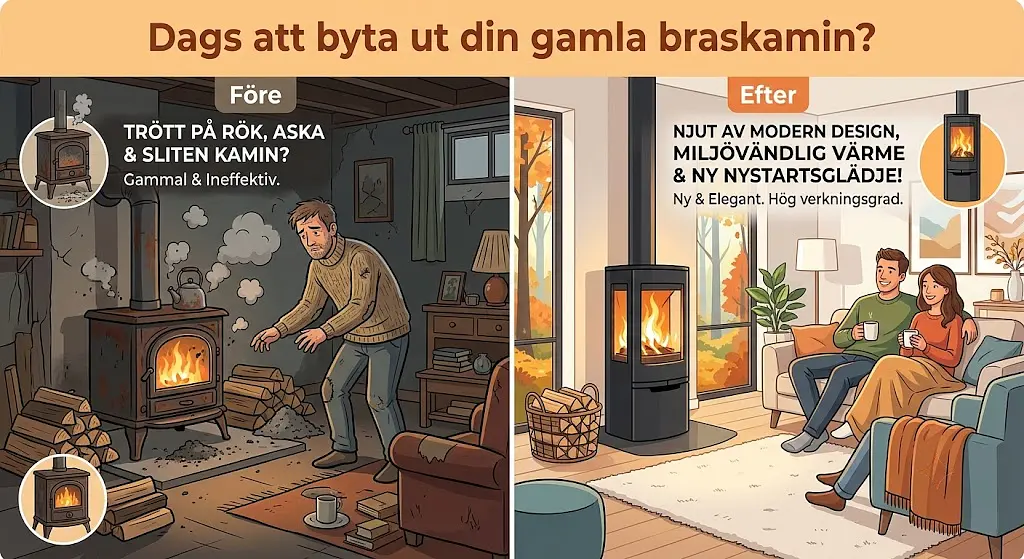
Many homes in Stockholm have a wood stove that has served for 20–30 years or more. It still works – but compared with a modern stove it burns both more expensively and more dirtily. Here are the signs that it is time to replace it, and what a replacement involves.
Signs your stove has done its job
Typical signs are a stove that devours wood without giving real heat, glass that constantly soots up, smoke leaking into the room, or worn gaskets and cast parts. Older stoves also lack modern combustion technology and emit far more particles.
Modern stoves burn cleaner – and cheaper
New stoves meet the EU Ecodesign requirements and reach efficiencies of up to 80 percent, while old stoves are often far below that. That means more heat from every log, less wood to carry and a fraction of the emissions. See our wood stoves or hybrid stoves that burn both wood and pellets.
The swap is simpler than you think
If the chimney is already in place, a stove replacement is often done in a day. The chimney is inspected, the old stove removed, and the new one connected and approved. Note that a replacement must also be reported to the municipality – read more in our guide on permits and rules.
What does it cost?
When replacing against an existing chimney, the cost is mainly the stove plus a modest labour cost – and the labour qualifies for the ROT deduction. Read more in our guide on what an installation costs.
Curious what a replacement would give you?
Book a free home visit and we will look at your current fireplace and suggest modern alternatives that suit your home.