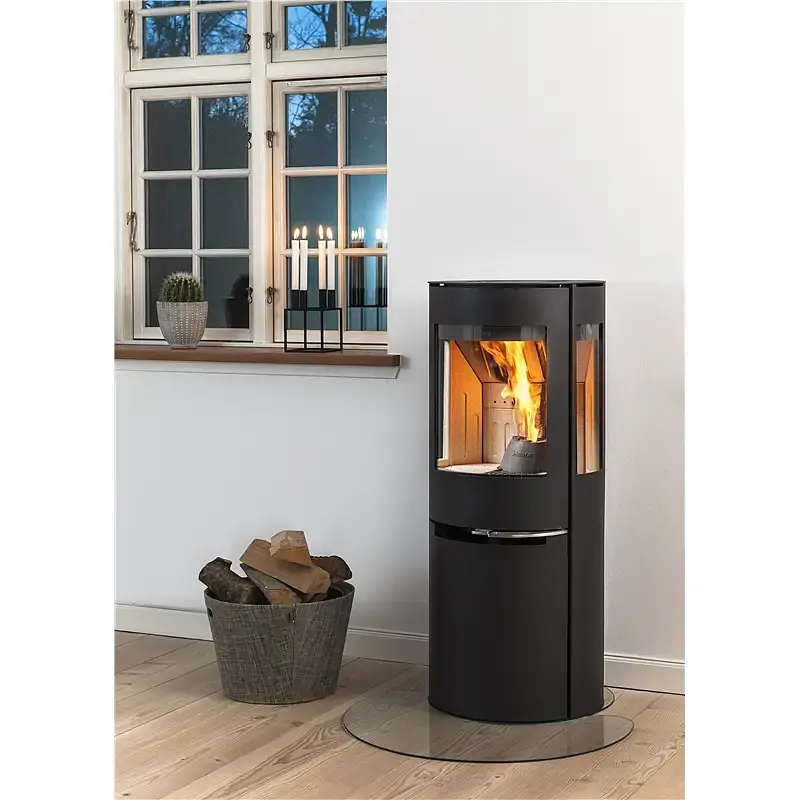
How you burn matters – for the heat you get, the environment and your neighbours. A few simple habits give you more warmth from your wood, lower emissions and glass that stays clean.
Start with dry wood
Dry wood is the foundation of all good firing. The moisture content should be below 20 percent, which normally means letting the wood dry for at least one year – preferably two – after splitting. Store it under a roof with good airflow, stacked so air can circulate. Never burn painted, pressure-treated or damp wood.
Light from the top
Top-down lighting creates draft faster, produces less smoke and burns cleaner. Place two or three larger logs at the bottom, a few smaller sticks on top, and firelighters or birch bark at the very top. Light it at the top and let the fire work its way down.
Give the fire the right amount of air
Leave the air vent fully open until the fire is properly established, then adjust it down to a suitable level. Choking the air supply – slow smouldering – lowers efficiency, causes soot and dramatically increases emissions. Add smaller amounts of wood more often rather than filling the stove and cutting the air.
How to tell you are doing it right
The smoke from the chimney should be nearly invisible or whitish – yellow or black smoke is a sign of poor combustion. The flames should be bright and lively, and the glass should stay largely clean on its own.
Want more advice?
During a free home visit we are happy to show you how to get the most out of your fireplace – or help you find a new stove that burns cleaner and more efficiently.